
Taylor Swift ivy meaning – Lately, I bumped into one of those TikTok lists you don’t actively search for, but somehow need. Taylor Swift sad songs with the most poetic lyrics. There was no commentary.
No explanation. Just text on the screen, one line after another, drifting past like borrowed feelings. I let it play while half-scrolling, half-listening, until I stopped at ivy.
It wasn’t because the song was new, it was because it felt familiar in a way I hadn’t noticed before.
On TikTok, “ivy” keeps resurfacing quietly. Not as something loud or viral, but as a mood people sit with. Clips, captions, and edits circle the same word, the same image, the same restrained ache.
There’s love that grows slowly, love that stays secret, love that learns patience. It wraps itself around what’s already there, it waits. To some, it looks like devotion, others read it as restraint, for many, it feels romantic.
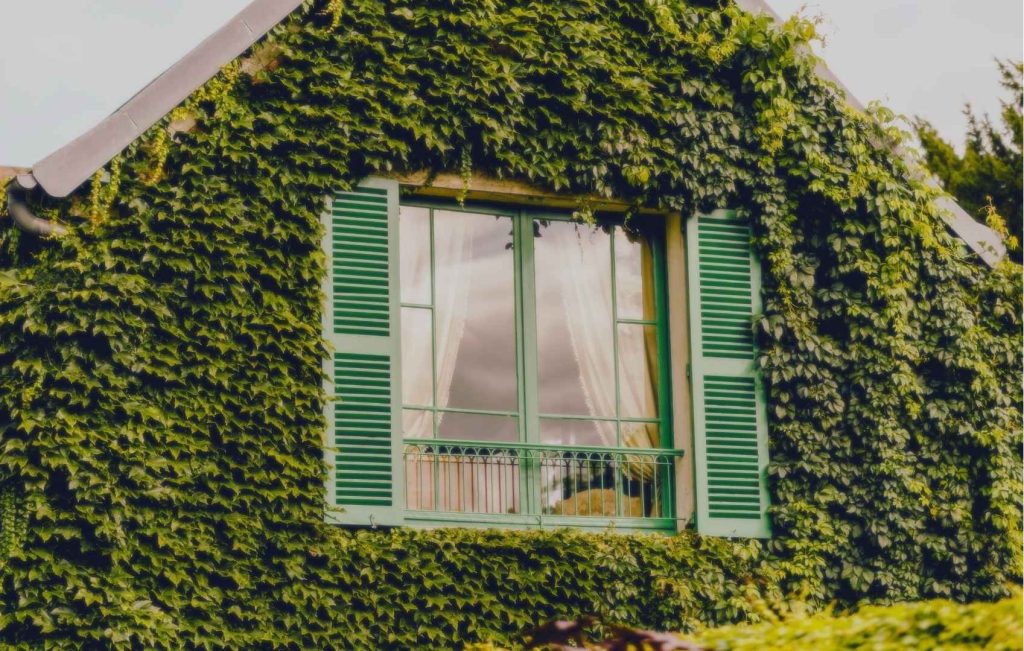
Still, ivy has never been a gentle symbol. It grows where it can. It doesn’t ask whether the wall is strong, and it doesn’t check if the structure beneath it is ready to hold weight. Ivy adapts, climbs, and persists.
The result is beautiful, yes, but also relentless. That tension is what makes the metaphor linger.
In softer readings online, ivy-love is framed as loyalty. The kind that stays through uncertainty, the kind that believes time will solve what clarity hasn’t, the kind that grows quietly until it feels permanent.
Sometimes, that reading is true, some loves do need time, some things really do mature slowly. Yet there’s another interpretation sitting just beneath the aesthetic. Ivy doesn’t build the house. It depends on it.
People, however, aren’t plants. We don’t always thrive by adapting endlessly. At times, patience isn’t wisdom, it’s survival. And sometimes, what’s needed isn’t more waiting, but ground. Something solid enough to rest a life against, something that doesn’t require constant adjustment just to stay upright. That’s the part these sad-song lists don’t spell out. It’s easier to romanticize endurance than to talk about limits, to frame waiting as virtue than to admit that waiting costs something, to say love grows than to ask what it’s growing on.
This might be why “ivy” resonates so deeply right now. So many of us have loved quietly. Carefully. Persistently. We’ve grown around uncertainty, hoping it would eventually harden into something stable. Hoping love could become structure.
Sometimes it can, sometimes it can’t. Learning to tell the difference, without turning endurance into poetry might be its own kind of maturity.
Ivy (My Version)
We grew like ivy
because we didn’t know
another way to stay.
No one told us
that growing
and surviving
aren’t the same thing.
You waited.
I waited differently.
Time passed through us
unevenly.
We kept saying almost—
almost stable,
almost ready,
almost there—
until almost
became the whole story.
I didn’t leave because love was gone.
I left because love
was asking me
to live suspended.
You didn’t fail me.
I wasn’t impatient.
That’s the lie people like
because it sounds cleaner.
The truth is uglier:
Some lives cannot be held together
by care alone.
Some loves arrive
when there is no ground yet.
Some endings happen
without anyone being wrong.
That is a tragedy.
Not the kind with villains—
the kind where everyone
loses something real.
We don’t talk enough about that kind.
We rush grief.
We ask it to be noble,
or instructive,
or aesthetic.
But grief is not a lesson.
It’s a period of time
where nothing grows.
So let it be bitter.
Let it sit.
Let it take as long as it takes.
I will not pretend
this was beautiful.
I will only say
it was honest.
And honesty, too,
deserves time
to be mourned.